Industrial hose is built to handle demanding applications, but no hose lasts forever. Abrasion, pressure, temperature, chemicals, movement and everyday use can gradually weaken a hose and its fittings.
Recognizing the warning signs of hose deterioration can help maintenance teams address a problem before it becomes a leak, unexpected failure or source of costly downtime. Regular inspection is especially important for hoses used in demanding industrial environments.
Here are seven common signs that an industrial hose should be evaluated for replacement.
Hose Damage Often Starts on the Outside
A routine visual inspection can reveal many potential hose problems. Look closely at the hose cover, bends, connection points and areas where the hose regularly contacts floors, equipment or other surfaces.
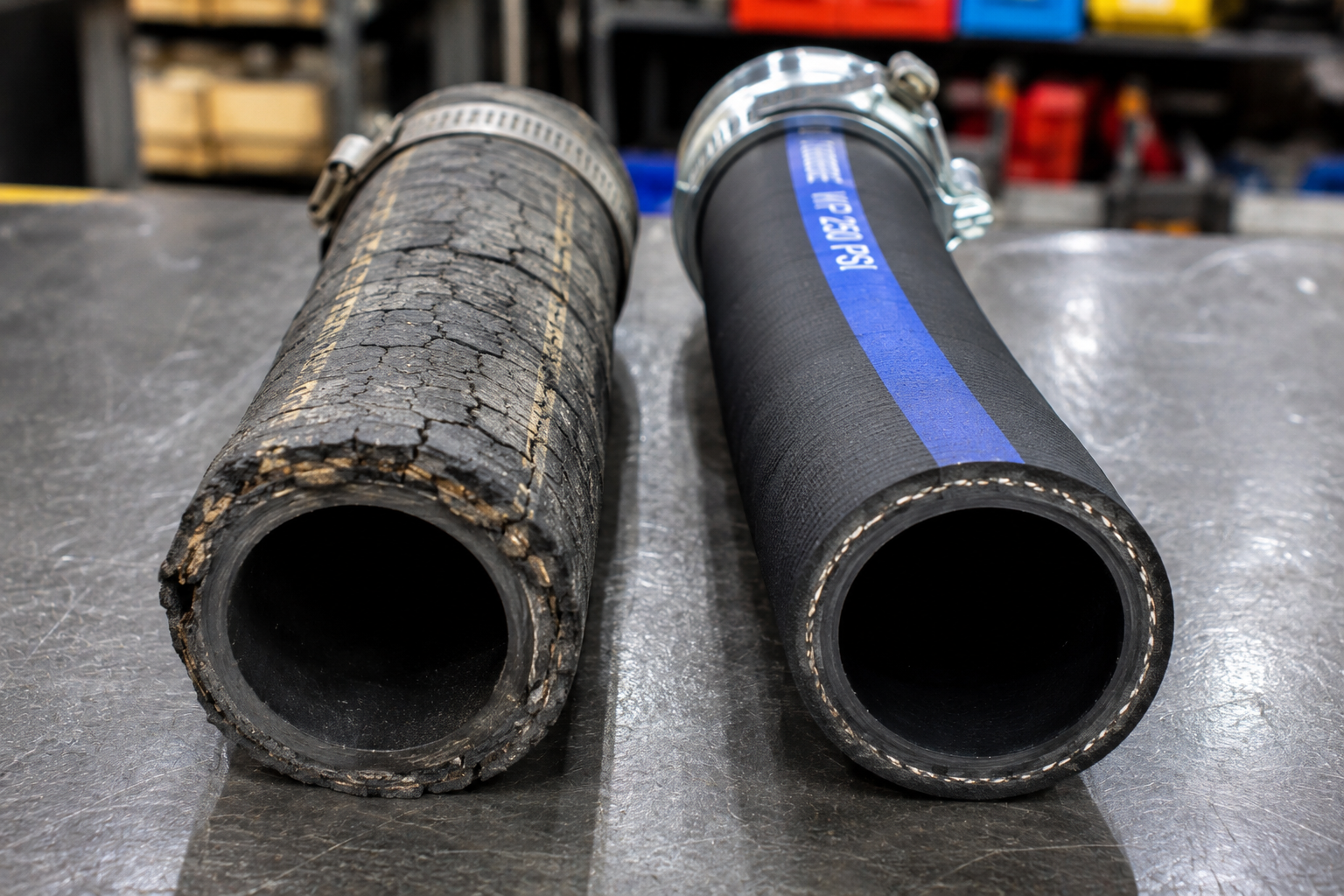
Surface wear does not always mean immediate failure, but cracking, deep abrasion, exposed reinforcement or changes in the shape of the hose are signs that the assembly deserves closer attention.
7 Warning Signs an Industrial Hose May Need Replacement
Hose condition should be evaluated as a complete assembly. The hose cover, body, reinforcement, ends and fittings can all provide clues about whether continued service is appropriate.
Cracks, Cuts or Visible Surface Damage
Cracking, splitting or deep cuts in the outer cover can indicate deterioration or mechanical damage. Pay particular attention to areas near fittings and places where the hose repeatedly bends.
Excessive Abrasion or a Worn Outer Cover
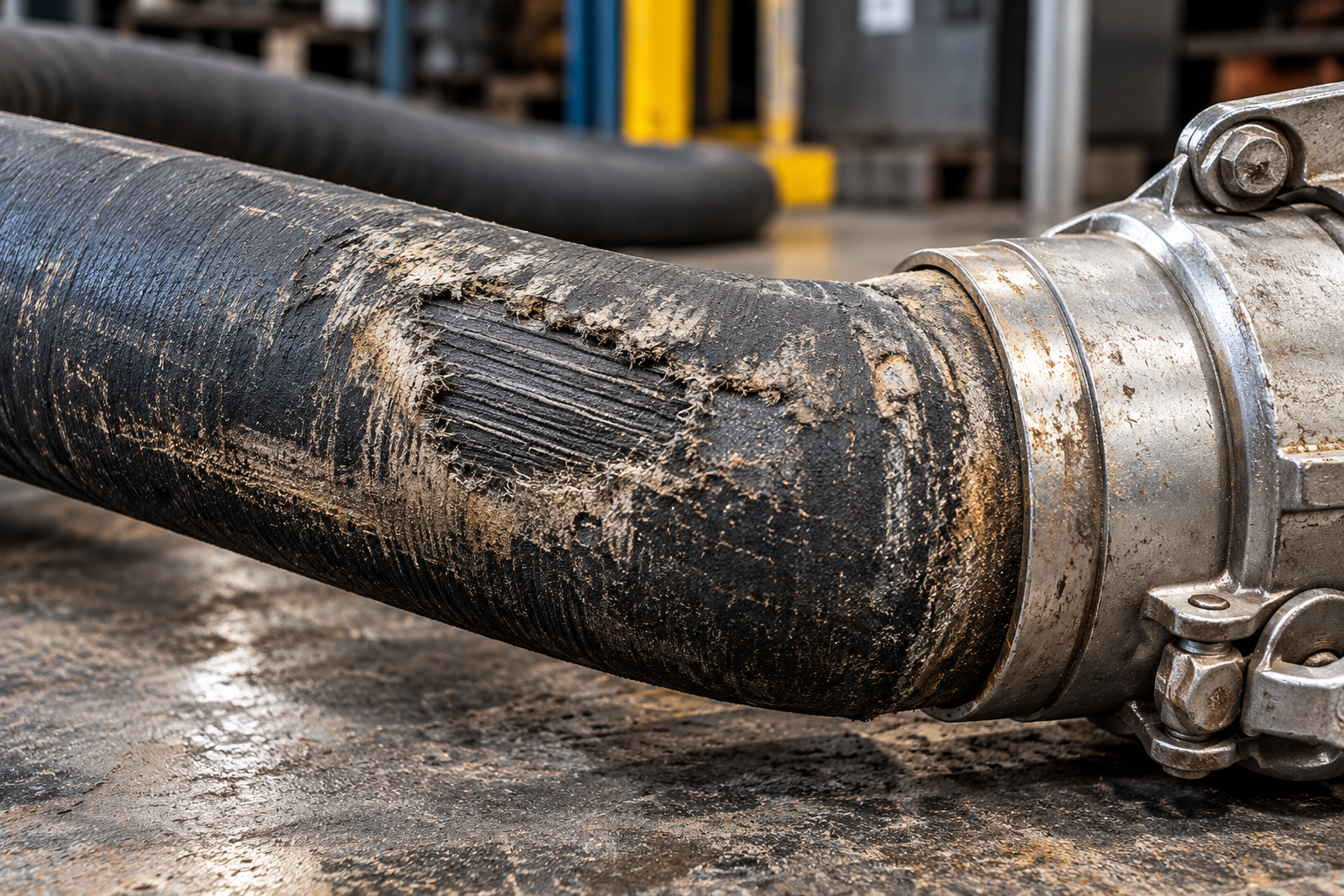
Industrial hoses are often dragged, flexed or positioned against machinery and rough surfaces. Significant abrasion can wear through the protective outer cover and potentially expose reinforcement underneath.
Leaks, Seepage or Blistering
Fluid around the hose body or fittings should be investigated. Blisters, bubbles or unusual swelling can also indicate that the hose has been affected internally or that the hose material may not be suitable for the application.
Kinks, Flattening or Permanent Deformation
A hose that remains flattened, twisted or kinked after pressure is removed may have suffered structural damage. Deformation can also restrict flow and place additional stress on the hose.
The Hose Has Become Stiff, Brittle or Unusually Soft
A noticeable change in flexibility or texture can be a sign of aging, heat exposure, chemical incompatibility or deterioration of the hose material.
Damaged, Loose or Corroded Fittings
The hose and fittings work together as an assembly. Loose connections, damaged couplings, corrosion or movement between the hose and fitting should not be ignored.
Declining Performance or Repeated Hose Problems
Reduced flow, recurring leaks, repeated fitting problems or unusually frequent hose failures can indicate a larger application issue. The replacement hose may need different construction, material, reinforcement or fittings for the operating conditions.
Pay Attention to Where the Hose Is Wearing
The location of the damage can tell you something about why the hose is wearing out.
For example, repeated abrasion in one area may indicate that the hose is rubbing against machinery, a floor, a sharp edge or another component. Replacing the hose without addressing the cause could result in the same problem happening again.
Hose routing, bend radius, movement and contact points should all be considered when evaluating an industrial hose application.
How Long Should an Industrial Hose Last?
There is no single replacement interval that applies to every industrial hose. Service life depends heavily on the application, environment and how the hose is used.
What to Look for During a Hose Inspection
Regular inspection gives you an opportunity to identify deterioration before a hose problem interrupts an operation. Depending on the application, inspection may include the following:
If a hose shows significant damage, leakage or other signs that its integrity may be compromised, it should be evaluated before being returned to service. Hose selection and inspection requirements should always reflect the specific application and operating conditions.
Don't Overlook the Hose Fittings
Even when the hose itself appears serviceable, fittings and connection points should be inspected carefully. A hose assembly depends on both the hose and the fittings being appropriate for the application and remaining in good condition.
Look for corrosion, physical damage, leakage, looseness or movement at the connection between the fitting and hose.
When replacing an assembly, identifying the existing hose size, fitting style and application requirements can make it easier to determine the appropriate replacement.
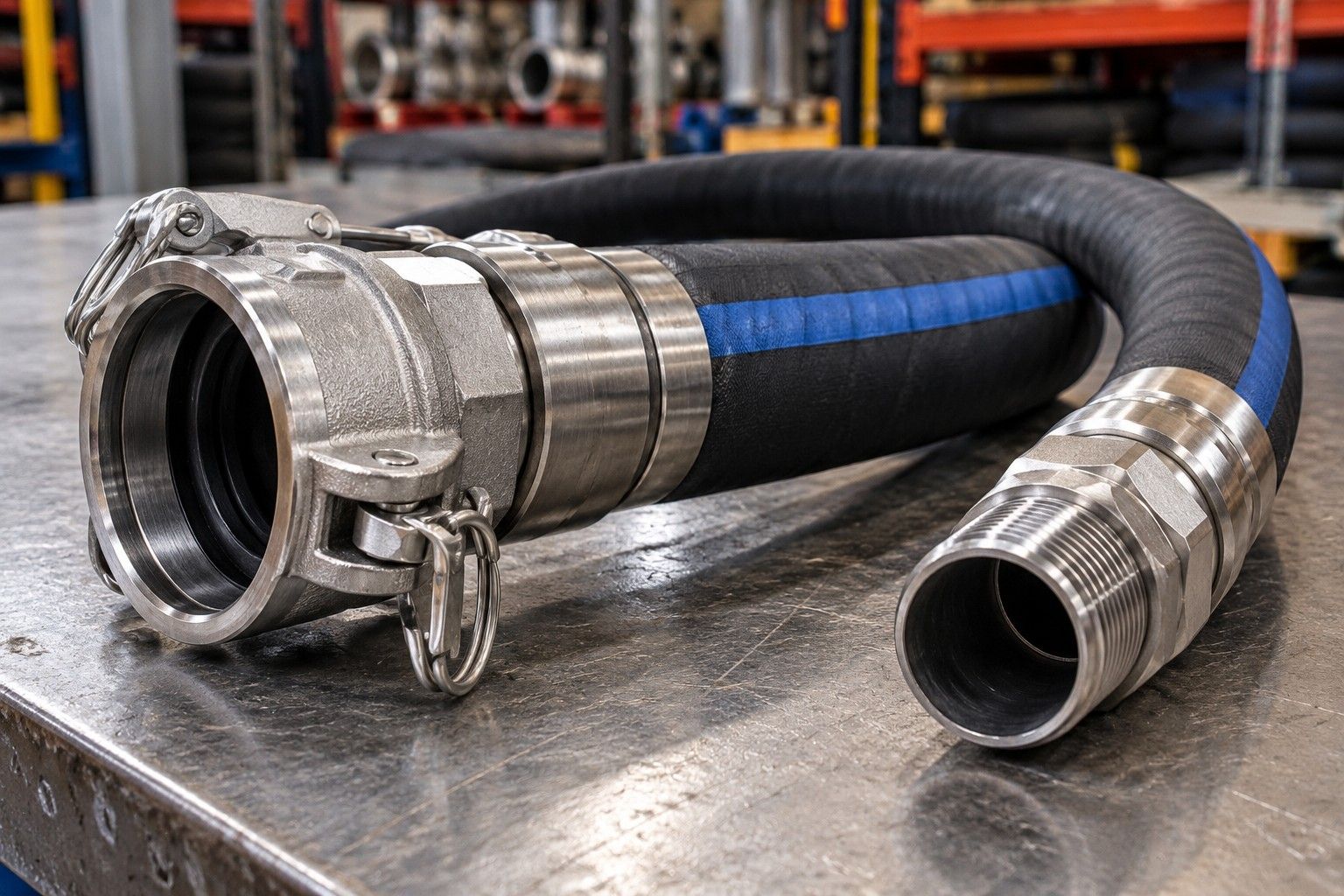
Bring Your Existing Hose to Industrial Rubber & Supply
If you're replacing an existing industrial hose and aren't sure exactly what you need, information about the current hose and its application can help identify the appropriate replacement.
Useful information can include the hose size, length, fitting type, material being transferred, operating pressure, temperature and how the hose is used.
When practical, bringing the existing hose or hose assembly to Industrial Rubber & Supply can also help with identifying its size, fittings and general configuration.
Industrial Hose Supply in San Bernardino
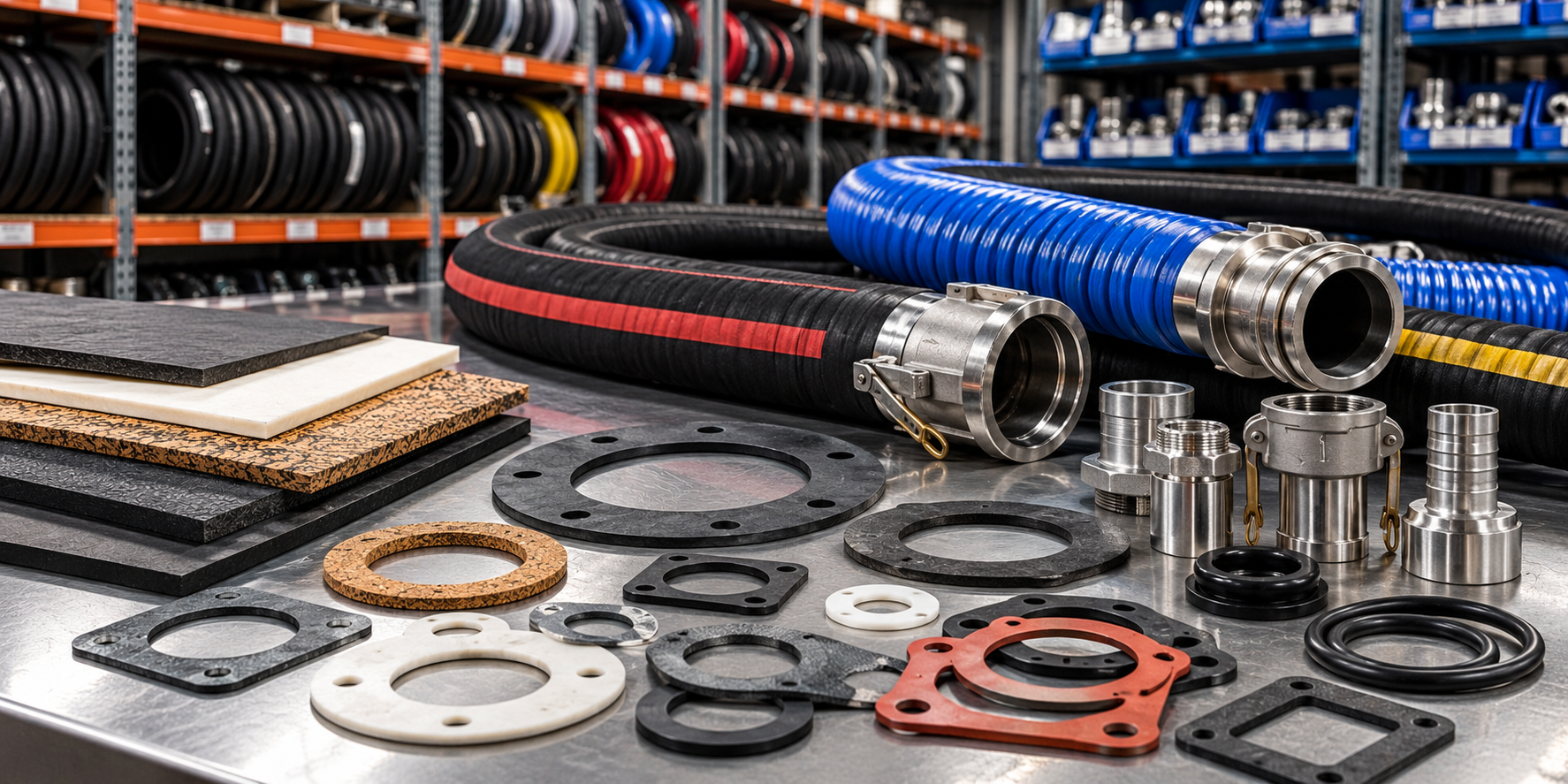
Industrial Rubber & Supply provides industrial hose, hose fittings, rubber products and custom gasket fabrication from our San Bernardino location for industrial customers throughout the Inland Empire.
Whether you're replacing a worn hose or sourcing components for a new application, having information about the operating conditions helps identify the hose and fittings appropriate for the job.
Need Help With an Industrial Hose?
Talk with Industrial Rubber & Supply about industrial hose, fittings and replacement hose applications. Visit us in San Bernardino or contact us to discuss what you need.