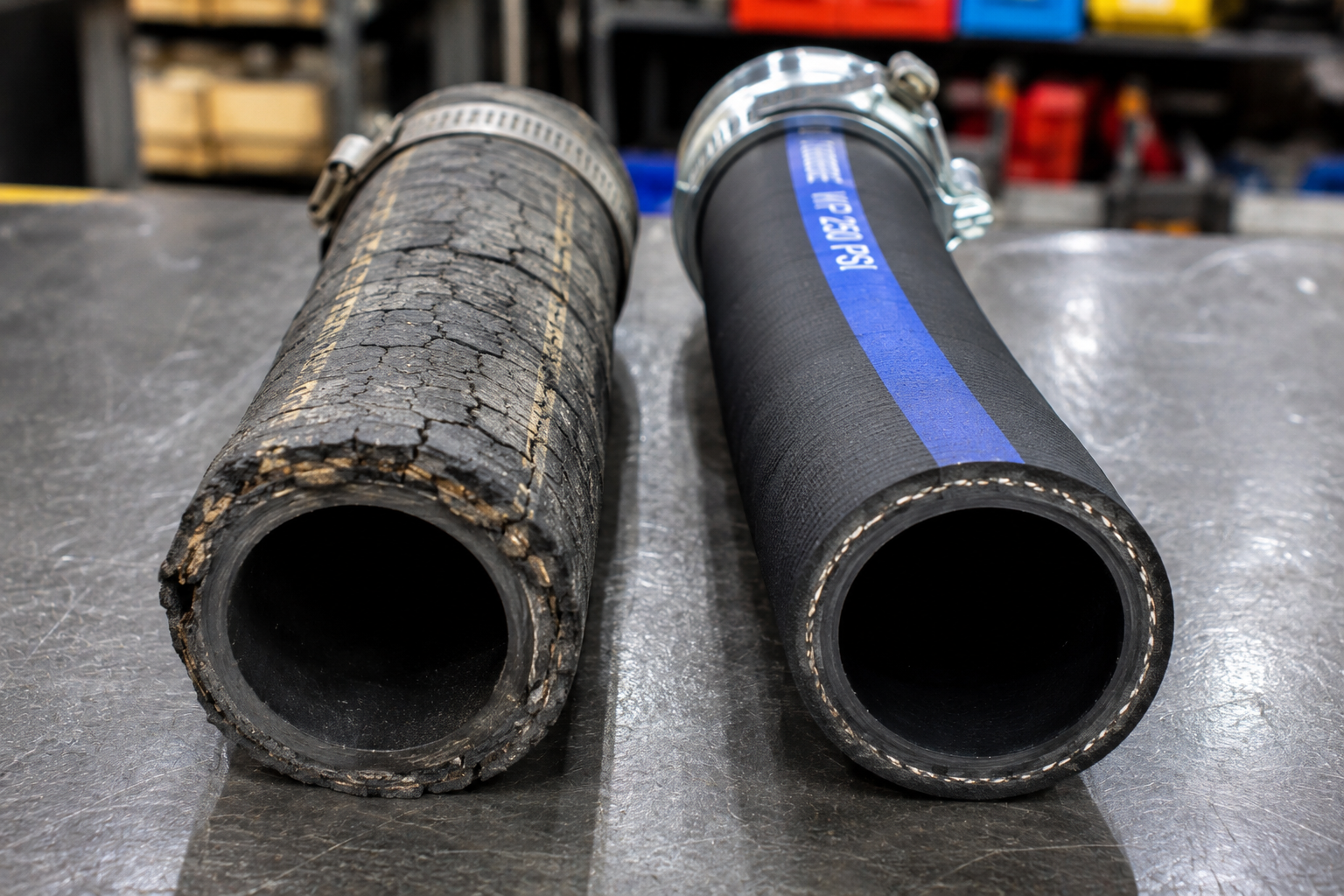
Choosing a gasket isn't simply a matter of finding one with the correct dimensions. The material has to be compatible with the equipment, fluid or chemical being sealed, operating temperature, pressure and surrounding environment.
Selecting an unsuitable gasket material can contribute to premature failure, leakage, equipment downtime and repeated maintenance. For industrial applications, understanding the operating conditions is one of the most important steps in choosing the right material.
Industrial Rubber & Supply in San Bernardino provides custom gasket fabrication and gasket materials for industrial, commercial, maintenance and equipment applications throughout the Inland Empire.
What Does the Gasket Need to Handle?
Two gaskets with identical dimensions may require completely different materials depending on where and how they are used. Before selecting material, identify the conditions the gasket will experience during normal operation.
Different Materials for Different Applications
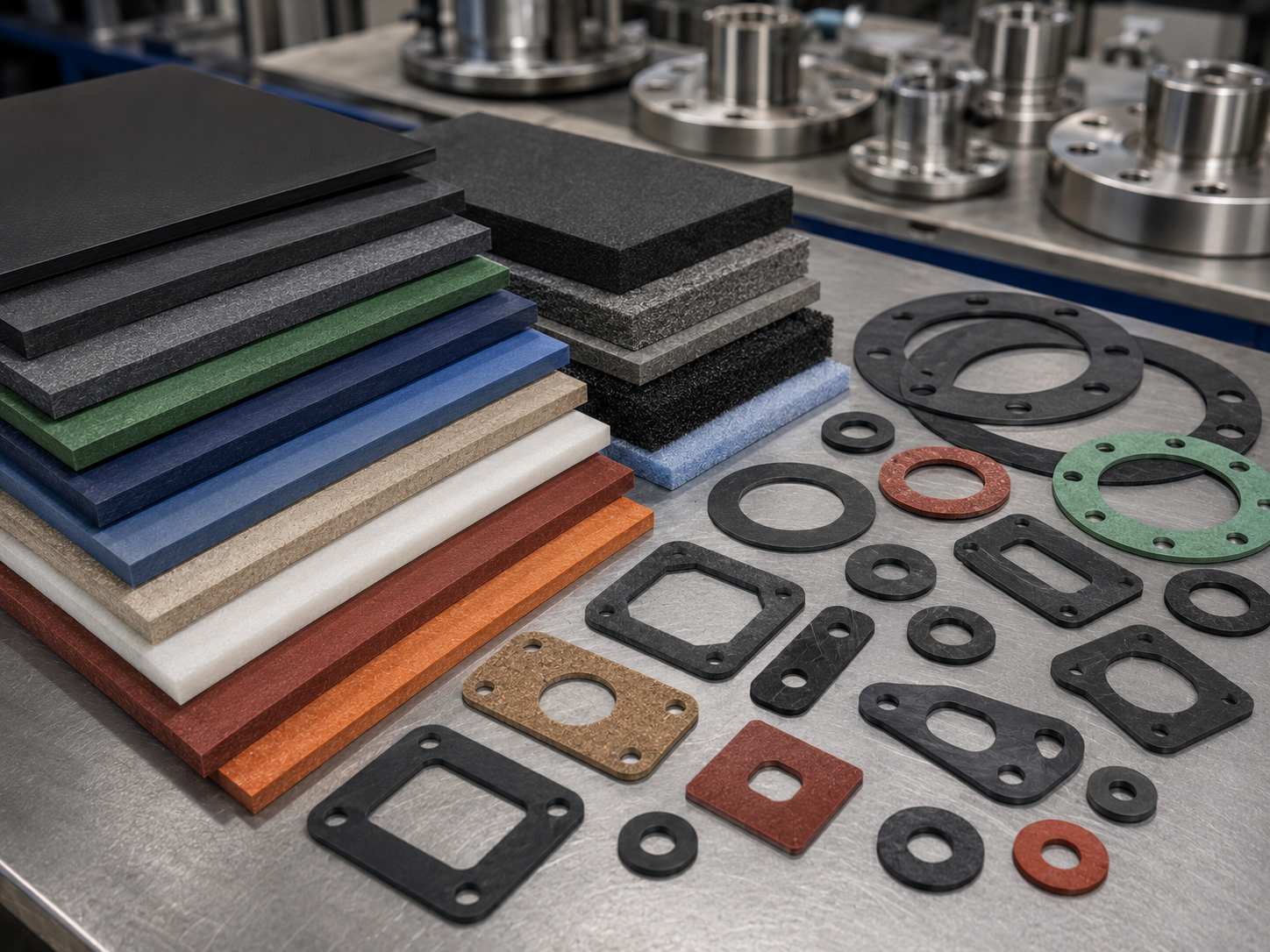
There is no single gasket material appropriate for every application. Material selection depends on the operating environment and the performance characteristics required.
Neoprene
Versatile synthetic rubber commonly used where weather, moderate oil and environmental resistance are important.
Nitrile Rubber
Frequently selected for applications involving petroleum-based oils, fuels and lubricants.
EPDM Rubber
Often used for water, weather, ozone and outdoor applications.
Silicone Rubber
Useful where flexibility and performance across a broad temperature range are important.
PTFE
Offers broad chemical resistance for many demanding industrial fluid and chemical applications.
Cork & Cork-Rubber
Compressible materials useful for covers, housings and irregular sealing surfaces.
Non-Asbestos
Industrial gasket sheet available for many flange, piping and equipment sealing applications.
Fiber Materials
Used for many general industrial and equipment applications depending on fluid and operating requirements.
The Material Matters as Much as the Shape
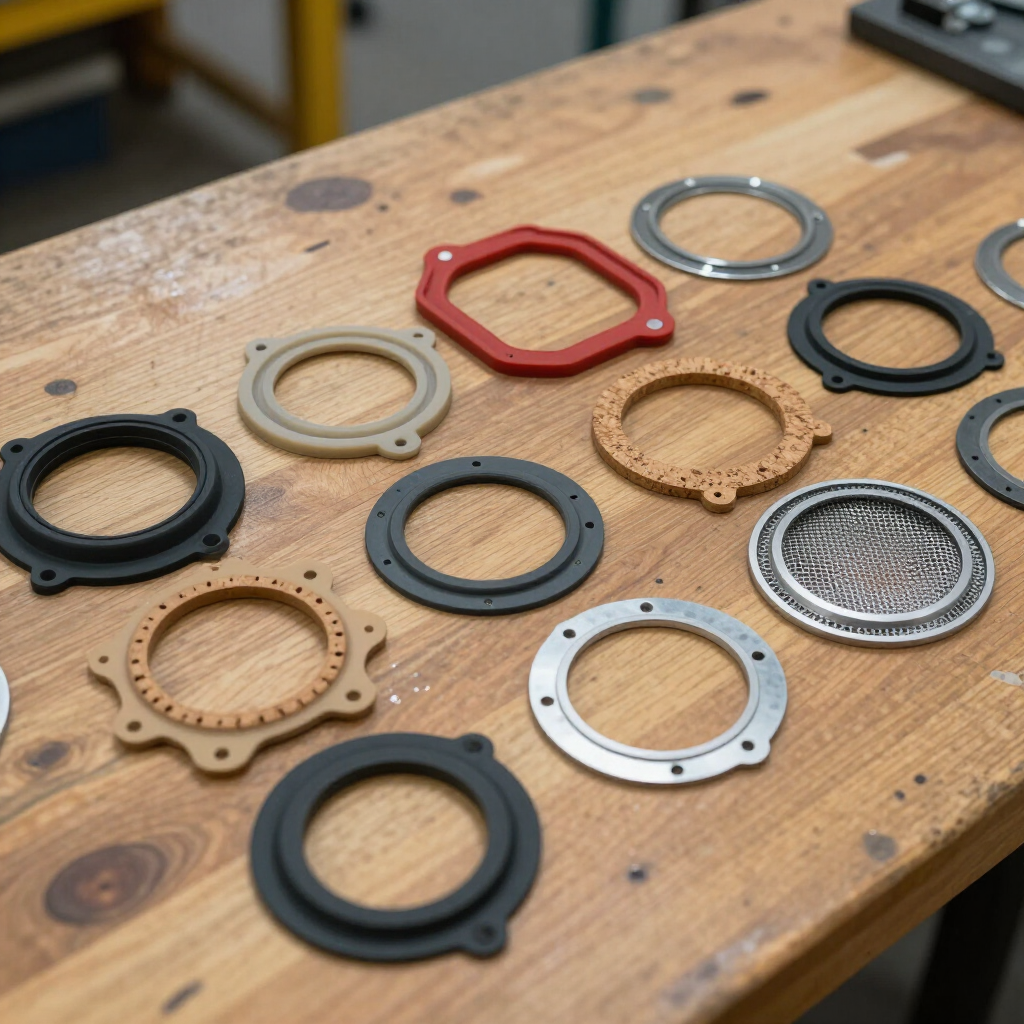
A gasket can have exactly the right dimensions and still perform poorly if its material is not compatible with the application.
Temperature, fluids, chemicals, pressure, compression and environmental exposure all need to be considered before selecting gasket material.
Temperature
Materials that perform well at moderate temperatures may lose strength, flexibility or sealing performance when exposed to temperatures outside their intended range. Startup, shutdown and temporary temperature spikes should also be considered.
Chemicals & Fluids
A gasket may have excellent physical strength but still be unsuitable if its material reacts poorly with the oil, fuel, water, chemical or other fluid being sealed. Material compatibility is critical.
Pressure
System pressure, flange design and clamping force influence how a gasket performs. The material must maintain an effective seal under the conditions created by the equipment.
Compression
A gasket must conform sufficiently to the mating surfaces. Material that is too soft may deform excessively, while material that is too hard may not adequately conform to the sealing surfaces.
Don't Select Gasket Material by Appearance Alone
Two gasket materials can look very similar while having significantly different performance characteristics. Color, texture and appearance alone generally aren't enough to determine whether a material is appropriate for an industrial application.
From Gasket Specifications to Precision Cutting
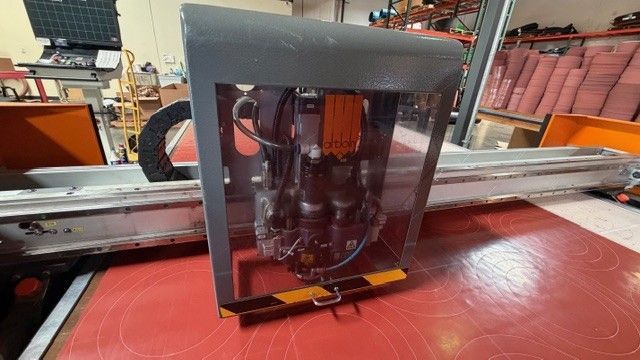
Once the material and dimensions have been determined, Industrial Rubber & Supply can use our Atom Flash Cutter to manufacture precision custom gaskets.
The digital cutting system allows us to produce gasket profiles from samples, drawings, CAD files or customer-provided measurements without requiring a traditional cutting die for many projects.
When Does a Custom Gasket Make Sense?
Not every piece of equipment uses a gasket that is readily available off the shelf. Older machinery, specialty equipment and application-specific systems may require a gasket made to particular dimensions.
- The original replacement gasket is difficult to locate.
- A specific gasket material is required.
- The dimensions are unique to the equipment.
- An existing gasket can be used as a pattern.
- A drawing or CAD file is available.
- Multiple identical replacement gaskets are needed.
Learn more about our custom gasket fabrication capabilities.
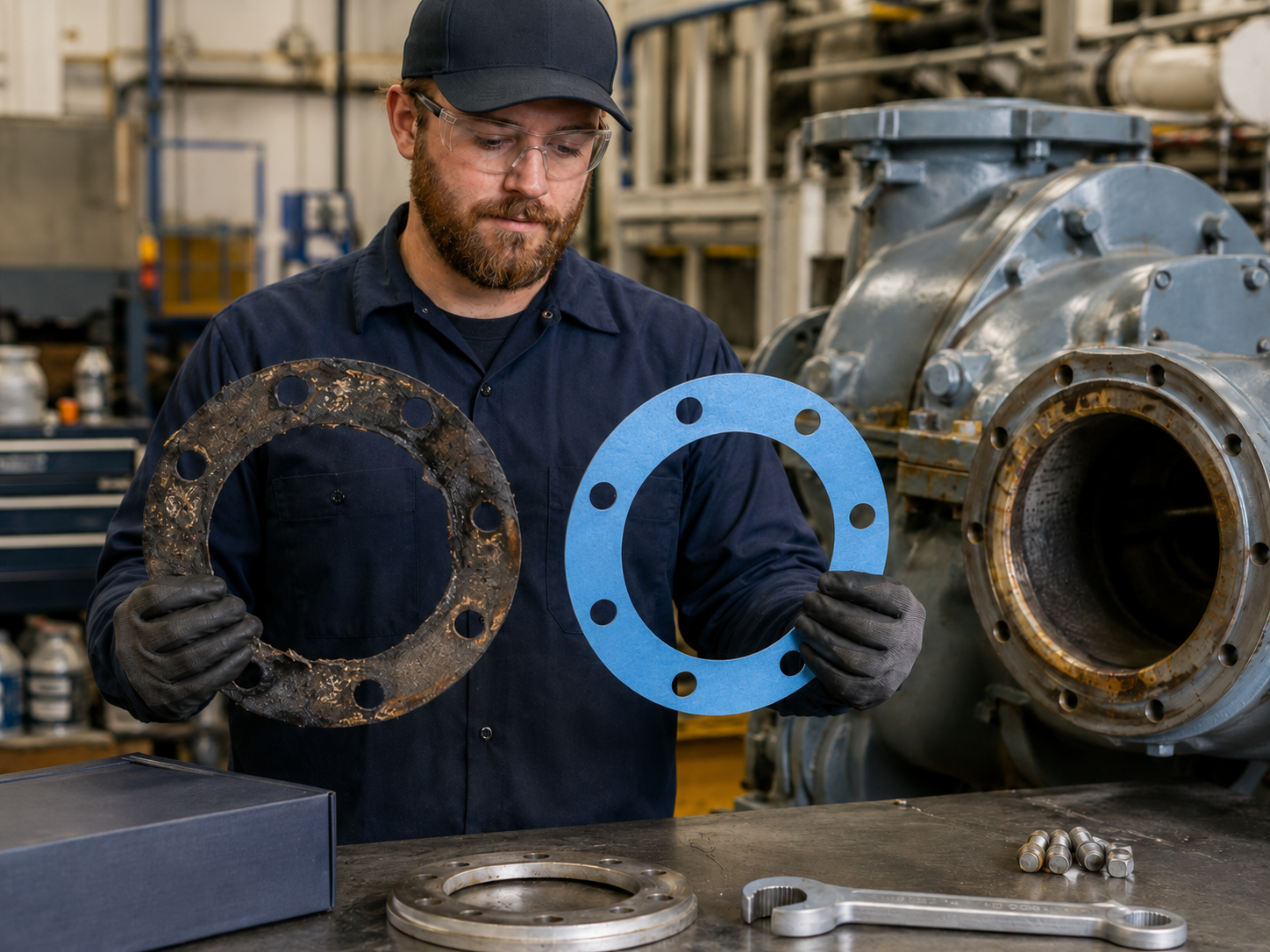
Information That Helps Us Evaluate Your Application
Providing as much information as possible about the gasket and its operating environment helps with evaluating material and fabrication requirements.
Need Help With a Custom Gasket?
Industrial Rubber & Supply provides gasket materials and precision custom gasket fabrication for industrial and commercial applications. Bring us your sample, drawing, CAD file, measurements or application details.
Request a Gasket Quote